the little smokies
… a beautiful place I hiked and something I “caught.”
Established in 1929, southern Indiana’s Brown County State Park, nicknamed the Little Smokies, encompasses 15,776 acres making it one of the largest state parks in the United States. Adding myself to the data of nearly 1.2 million annual visitors, I picked a day and picked a trail to pick up litter.
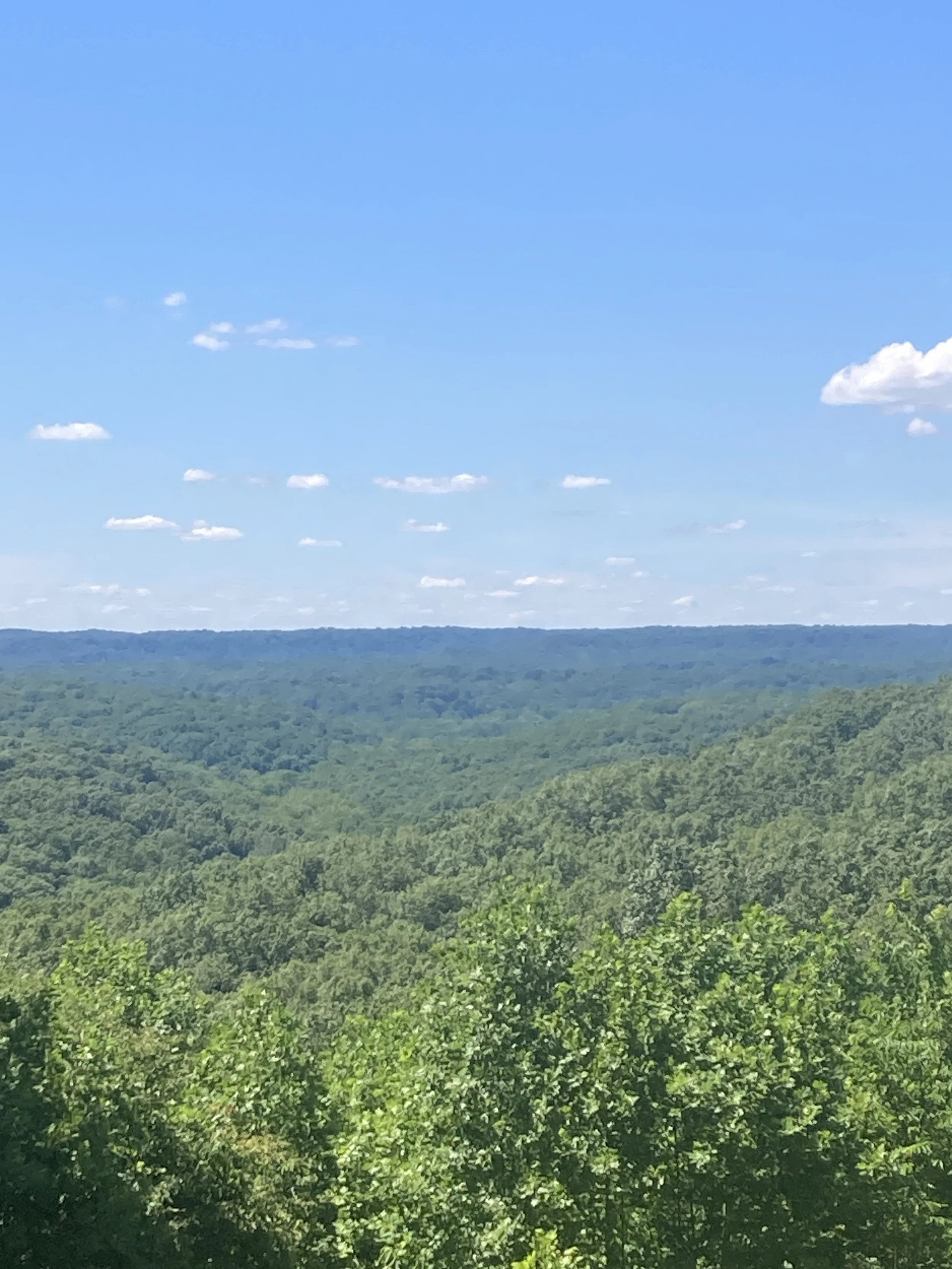
Brown County State Park Vista View
Felled trees, after recent summer storms, marked the rugged trail I hiked nearby a lake. But apart from nature’s debris, I was happy to observe there was very little human litter – mostly candy and energy bar wrappers, occasional shards of glass, and mysterious metal remnants. I did find a tangled fishing line that resembled a cobweb, but the plastic cluster of twine would not easily dissolve into the earth like a spider’s line.
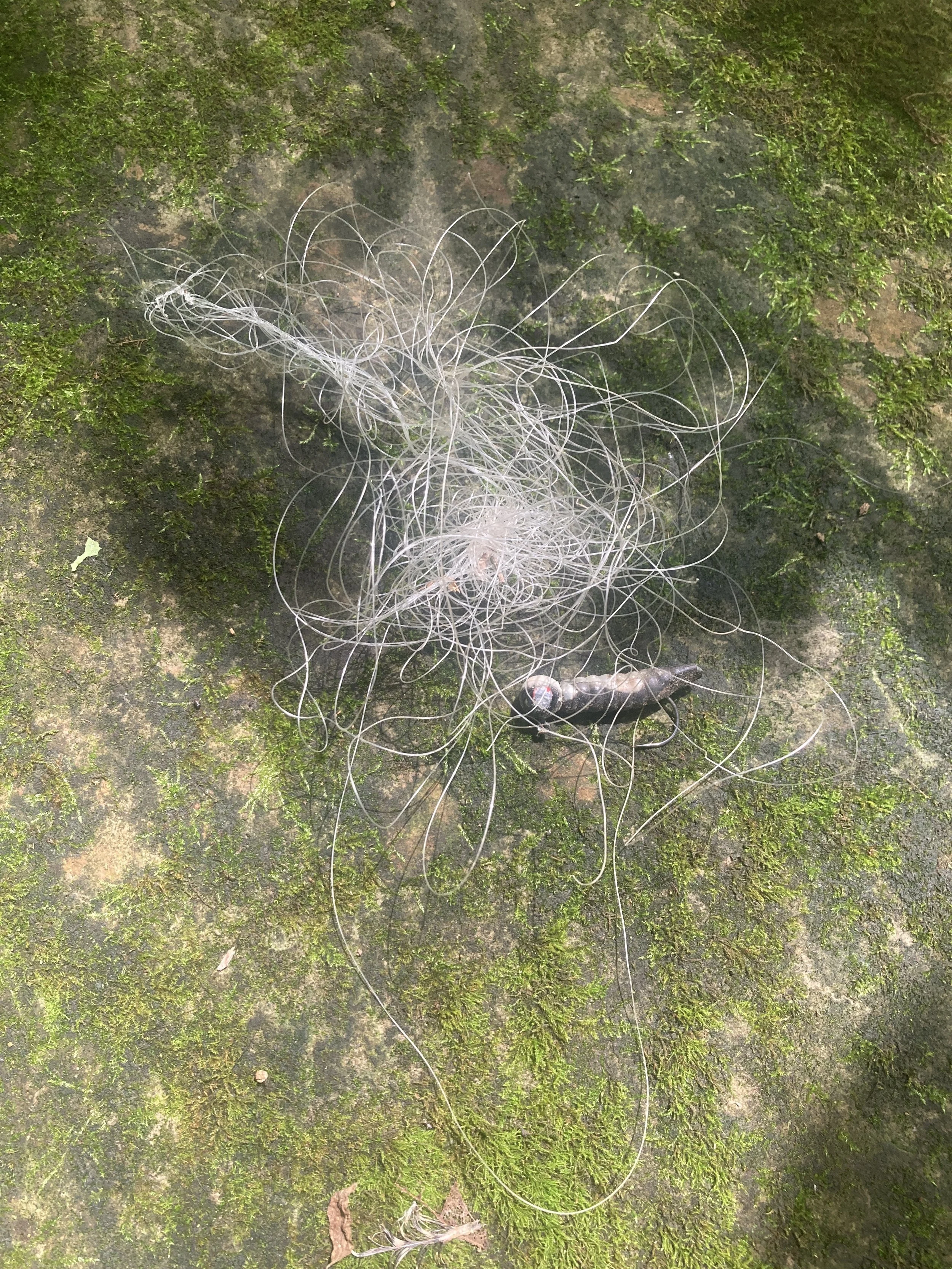
Tangled web of nylon
The history of fishing with a hook has evolved since ancient times. But up until 1935, most anglers used cotton and silk for their lines. Since the invention of nylon (thanks to DuPont chemist Wallace Carothers), lines have become stronger, more durable, and... less environmentally friendly. (Source)
According to iTechSoul, nylon is:
Non-biodegradable: Like most plastics, nylon takes decades (or even centuries) to break down.
Fossil fuel-based: It is derived from petroleum, contributing to resource depletion.
Microplastics: When nylon fabric is washed, it sheds microfibers that end up in oceans.
And yes, there are responsible ways to manage used fishing line. Below are some great reminders:
Reuse or recycle fishing line
Discard in a designated container
Cut into small pieces and remove hooks/lures
Properly dispose of all other fishing gear and trash
Educate others and spread awareness about responsible disposal practices
Always follow state and local regulations
Leave the area cleaner than when you arrived
Every small action counts towards protecting our environment. No matter how big or small, every effort to properly dispose of fishing lines can make a positive impact on our ecosystems. Let’s work together to keep our waterways clean and safe for all.
If you’d like to support my work with a donation, click here. Thank you!